12.09.2025
Link to the original article: https://www.maglocistac.rs/u-fokusu/bezbednosno-rizicno-kakvo-je-stanje-zeleznickih-stanica-na-pruzi-kroz-vojvodinu

Railway station in Subotica, photo: NJ/Maglocistač (archive)
The load-bearing walls of the reconstructed railway station building in Subotica are severely damaged, the canopy overlooking the station square is damaged and in poor condition, while the condition of the building’s roof structure is assessed as unfavorable.
The overall condition of the facility is described as “very damaged” with a rating of “1 – unsatisfactory”.
All this is stated in the Minutes of the Inspection Control of the Sector for Inspection Supervision of the Ministry of Construction, Transport and Infrastructure dated July 21st of this year, which Radio Free Europe (RFE) received under the Law on Free Access to Information.
The station building in Subotica is just one in a series of those located on the high-speed railway that, after modernization and construction, should connect the Serbian capital Belgrade with Budapest in Hungary.
The condition of the building was assessed as unsatisfactory eight months after the section of the railway running through Vojvodina, from Novi Sad to Subotica, was supposed to be opened and put into service on November 24, 2024.
After a canopy collapsed at the reconstructed station in Novi Sad, killing 16 people, the opening of the section was postponed and construction inspectors went to the field.
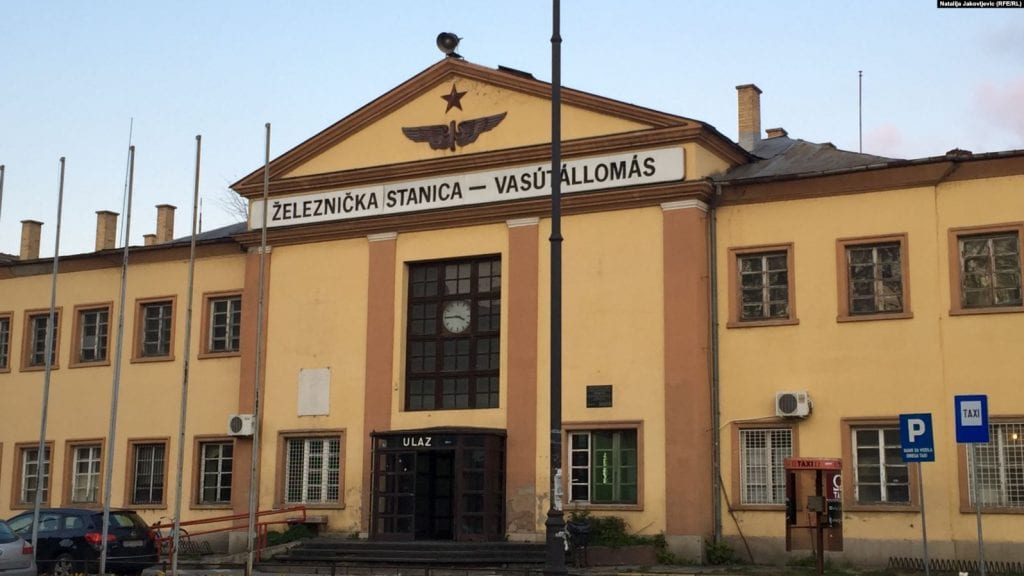
There are five more reconstructed station buildings on the section, which were also declared unsafe in December last year, although, according to the original plan, they were scheduled to open and receive passengers at that time.
As shown by the documentation obtained by RFE/RL in accordance with the law, the construction inspection discovered in an unannounced inspection that the station facilities in Subotica, Kisač, Bačka Topola, Naumovićevo and Žednik were a safety risk, and that the reconstruction was carried out without building permits and without static calculations.
All controls were carried out at the end of last year, and only in the case of Subotica was the RFE/RL editorial office provided with a report from July 2025 on the actions taken during the first inspection.
The opening of the building in Subotica was announced in October last year.
According to data from construction logs, the reconstruction of the station building in Subotica began on June 7, 2023, while the final works were carried out on November 13, 2024.
The building did not pass a technical inspection and was not put into operation, although in October last year, Serbian President Aleksandar Vučić announced that the work was complete and that the station would be opened as soon as, at his initiative, signs in Hungarian were installed.
“The station will not open in five or six days, as originally planned. You will have to change something at the station, and it will be ready in the next 10 to 12 days. The signs (information boards for passengers) are in Serbian and English, but we are missing them in Hungarian,” Vučić said on October 3, 2024.

Just four weeks later, a concrete canopy collapsed on a reconstructed station building in Novi Sad, killing 16 people.
Instead of the ceremonial opening of the remaining facilities on the Novi Sad-Subotica railway route, extraordinary inspections followed.
According to the minutes of the first inspection conducted on December 24, 2024, it was determined that the work on the station building in Subotica was not carried out in accordance with the issued building permit.
“The investor is ordered to check the static stability of the facility,” the minutes of the inspection state.
The same order for stability checks was issued for all station buildings that were inspected by the construction inspection after the accident in Novi Sad.
The investor, JP Railway Infrastructure, announced a tender in February 2025, and the job of testing the static safety of facilities was awarded to the IMS Institute on May 16.
What is the Institute for Materials Testing ad Belgrade?
IMS Institute is a joint-stock company engaged in testing, examining and quality control of materials, structures and technologies in construction and industry.
It was founded in 1948 and is considered one of the key institutions in the region when it comes to the safety and reliability of construction facilities.
IMS has been engaged in numerous government projects to date.
Checking the statics at the Prokop railway station in Belgrade and examining construction waste from the Hotel Jugoslavija are some of the Institute’s latest work.
The building inspection report from July 2025 cites parts of a study on the verification of the static stability of a building in Subotica, prepared by the IMS Institute.
The report reveals that the classification of the condition of the building is based on assessments of the condition of individual structural elements, from which a rating for the entire building is derived. The ratings range from zero, which indicates that the condition is dangerous and requires urgent intervention, to five, which indicates that the structure is in good condition with the obligation of regular maintenance.
In the case of the reconstructed station in Subotica, the overall condition of the facility was described as “very damaged” with a rating of “1 – unsatisfactory”. Remediation was proposed.
In the documentation submitted to RFE/RL by law, apart from a study on the condition of the building in Subotica, there is no report on the fulfillment of the ordered measures and the stability check of other buildings that were previously assessed as unsafe.
Whether the studies on their static stability have been completed and what has been determined are questions to which RFE/RL has not received an answer from the project investor – JP Railway Infrastructure.
What did the inspection find for other buildings on the route?
At the end of last year, the building inspection also inspected the station building in Bačka Topola, which is also part of the state project for the reconstruction and construction of the Novi Sad-Subotica railway.
The inspection report, which was carried out on December 11, 2024, states, among other things, that cracks were observed in the load-bearing walls and roof structure, holes in the attic floor, and moisture.
The inspection determined “illegal operations and conduct”, ordered a check of the static stability of the facility, and suspended all work.
Part of the Novi Sad-Subotica railway modernization project is the station building in Kisač, which was subject to inspection on December 25th last year. In the case of this facility, the construction inspector determined that “the reconstructed and extended facilities at the Kisač railway station endanger the environment, safety and health of people.”
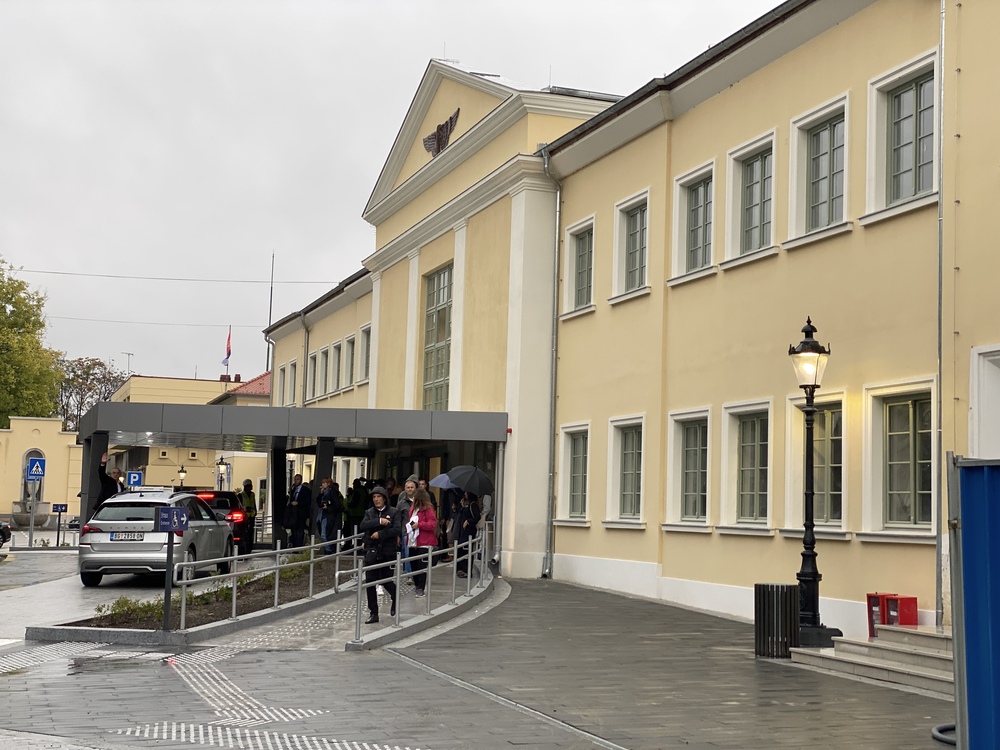
The station building in Žednik, about twenty kilometers from Subotica, also received a poor rating from the building inspection.
“The facility that has been built has deficiencies that pose an immediate threat to the stability, or rather the safety of the facility and its surroundings, and the life and health of people,” is the conclusion of the Republic Construction Inspector dated December 25, 2024.
The minutes state that “the work carried out on the facility does not comply with the law and prescribed standards.”
The Naumovićevo station building is located on the Novi Sad – Subotica railway modernization route, which was inspected by the construction inspection in December last year.
In the case of this facility, it was also determined that structural damage was observed on the building, which poses an immediate danger.
The report on the inspection of the building at the Naumovićevo railway station states that it is not at all clear what work was carried out and in what manner.
“It was not possible to determine whether the ground floor and first floor interfloor structures were repaired, or the method of repair if it was. After inspection and determination of the facts, a high risk was assessed,” the minutes state.
The only station building that was subject to inspection and in which no illegal construction was found was the railway station building in Zmajevo, a settlement near Vrbas.
“The facilities in question do not pose a threat to the environment, safety and health of people,” concludes the minutes of the Republic Construction Inspection on the extraordinary inspection of the facility conducted on January 24, 2025.
Security or deadlines
The reconstruction of the railway station facilities is part of the state project to build a high-speed railway from Belgrade to Budapest. This work has been entrusted to the Chinese consortium CRIC&CCCC, which consists of the companies China Railway International and China Communications Construction Company. The contract was concluded under an intergovernmental agreement, by direct negotiation, without a tender.
After the collapse of the canopy on the station building in Novi Sad, which turned out to be the work of numerous subcontractors, Chinese companies announced that before the accident they had informed the Serbian Railways Infrastructure of numerous problems at the station buildings, and that it was therefore “necessary to examine the usability and durability of the stations along the Novi Sad – Subotica route.”
“The question arises as to what principle was the decision made in the Conceptual Design to reuse old facilities? Before the decision to reuse was made, were the facilities examined, assessed and inspected by experts?” the Chinese companies’ email states.
The railway infrastructure did not confirm the authenticity of this communication.
Representatives of the Chinese consortium, as of the publication of this text, have not responded to RFE/RL’s questions about the poor condition of the reconstructed station buildings, nor about further steps for their opening.
After the accident in Novi Sad, government representatives announced that the statics and safety of the stations would be checked, but they continued to insist on deadlines.
Minister of Construction Aleksandra Sofronijević promised in early June that the railway would not be put into service without issued usage permits for all facilities.
“The safety of citizens is our most important thing, but every day of delay in putting this railway into service costs Serbia a lot, and we should keep that in mind,” Sofronijević pointed out.
State project – suspicions of corruption
The reconstruction and modernization of the Belgrade-Subotica railway line, including terminals in Novi Sad, Subotica and other places, has been declared a project of national importance. The high-speed line connects Serbia with the planned railway network to Budapest, the capital of Hungary.
The Belgrade-Budapest high-speed railway is part of China’s Belt and Road Initiative and the country’s strategic goal of connecting the Greek port of Piraeus with Central Europe, namely Hungary as one of the European Union countries. The works are being financed by Chinese loans.
The Belgrade-Budapest high-speed railway construction project, estimated at two billion dollars, began in 2014 in Belgrade, at a summit of sixteen Central and Eastern European countries and China, and the contract for the modernization of the first section was signed in 2017 in Beijing.
Although it was previously announced that the high-speed line would be operational in 2018, today the section of the line from the Serbian border to Budapest is planned to be put into operation by the end of 2025, while the fate of the Novi Sad–Subotica section is uncertain after the collapse of a canopy at the reconstructed station in Novi Sad.
After the tragedy that killed 16 people, the Higher Public Prosecutor’s Office in Novi Sad launched an investigation against 13 people – engineers, designers and supervisory authorities – on suspicion of responsibility for the accident.
In parallel, the Prosecutor’s Office for Organized Crime is investigating financial irregularities and possible abuse of office, for which six people were arrested in August 2025, including former Ministers of Construction Goran Vesić and Tomislav Momirović.
Although investigations are ongoing, legal proceedings have not yet been initiated.
Contract extended to construction supervision companies
According to data from the construction inspection records, on all reconstructed station buildings that were inspected by the construction inspection, professional supervision of the execution of works was carried out by Projekt Biro Utiber doo, Novi Sad.
This company is responsible for the professional supervision of the entire reconstruction and modernization of the Novi Sad-Subotica railway. The job was awarded to them in a public procurement procedure on January 19, 2021, and the total value of the works amounted to 4.4 billion dinars, or about 37 million euros.
According to the Central Registry of Ultimate Owners, the majority owners of the company Project biro Utiber from Novi Sad are Hungarian citizens Gyorgy Lakits (44.02%) and Laszlo Almassy (29.98%).
Along with Project Bureau Utiber as the project manager, the group of bidders entrusted with professional supervision includes – “AG Institut” from Novi Sad, “SDC Profesional” Belgrade, Slaviša Ilić, an entrepreneur from Belgrade, “EGIS doo” from Belgrade, as well as two Hungarian companies – “Vikoti KFT” and “Utiber road investments LTD”.
The Ministry of Construction, Transport and Infrastructure has extended the supervision contract with these companies until January 31, 2027.