08.02.2026.
Link to original article: https://www.danas.rs/vesti/drustvo/delfinarijum-usce/
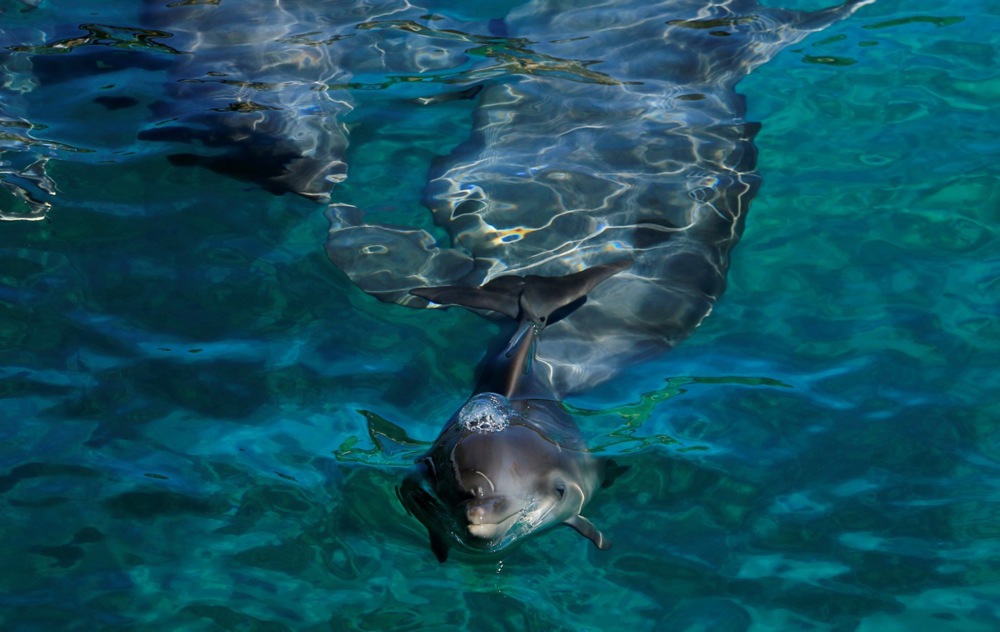
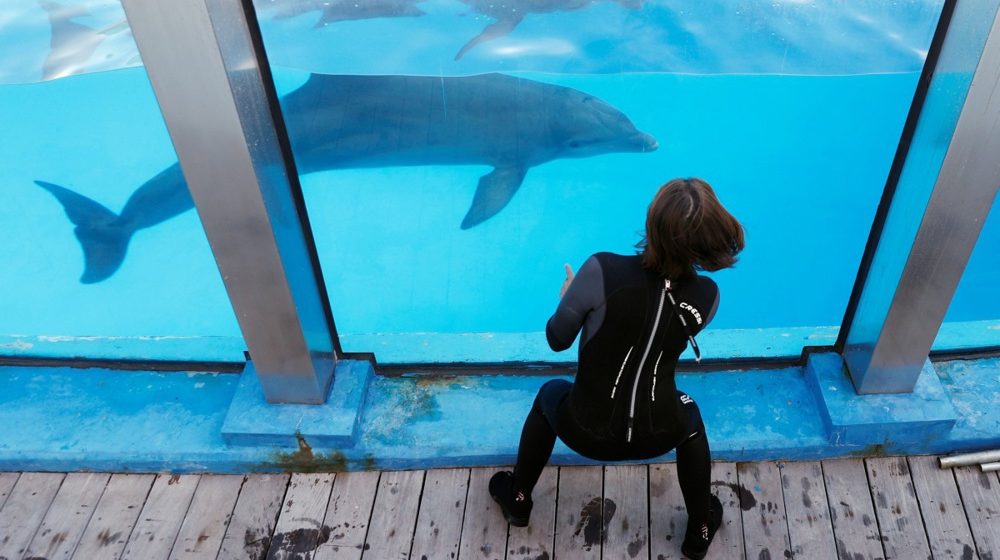 Photo: EPA/Kai Foersterling
While President Aleksandar Vučić and the government are gloating over the announced construction of a dolphinarium at Ušće, the public is violently indignant and signing petitions against this project.
There are many reasons why citizens do not want a dolphinarium.
First of all, it is unethical to keep living creatures in captivity and separate them from their natural habitat. For this reason, many countries are closing dolphinariums and aqua parks around the world.
The financial aspect is also questioned, because the money from the dolphinarium could be more wisely invested, considering that from time to time in a school or institution the ceiling collapses. We have also experienced situations where hospitals do not have heating and hot water, buildings are dilapidated, and roads in Belgrade and throughout the country are full of potholes.
There is a need to open or renovate cultural and artistic, health and social care, educational and other institutions.
While in asylums for abandoned animals across the country there are horrifying scenes and cruel conditions in which animals are tortured and starved, the government plans to put dolphins in an aquarium in Serbia, where even the climate does not suit them. It is neither humane nor a priority in Serbia to build a dolphinarium in which these aquatic mammals would be imprisoned, is the conclusion of Danas’ interlocutors.
“We will also have a dolphinarium. The aquarium will be near Ušće, and there will be a dolphinarium at the Expo. They say that nothing affects children with autism like therapeutic dolphins,” said the president .
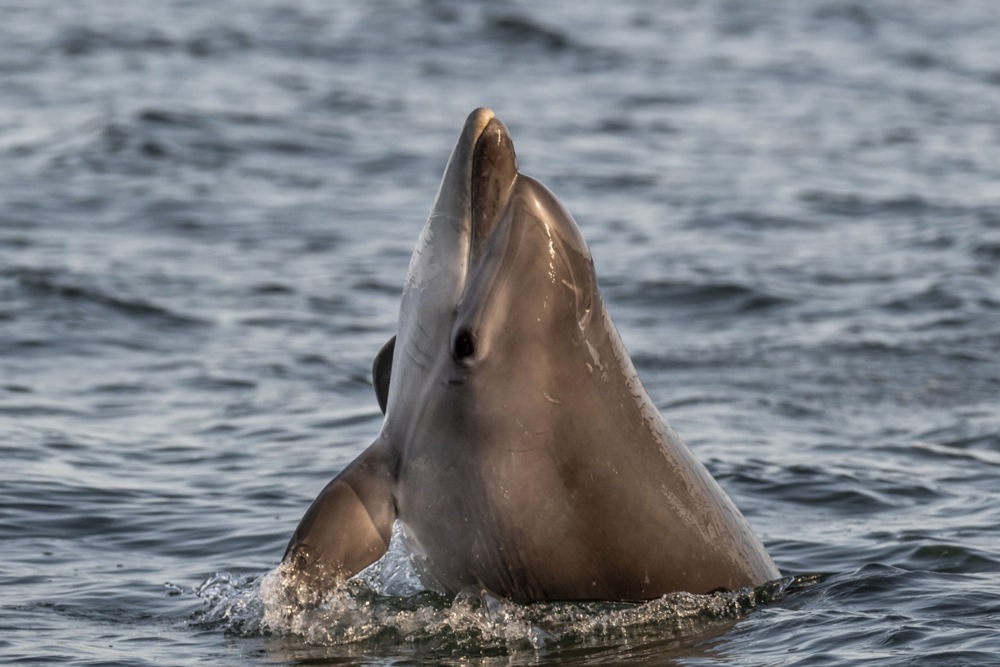
Jovanović: The closest dolphin habitat is 500 kilometers as the crow flies
The director of the Center for Local Self-Government (CLS) Nikola Jovanović explains that the dolphinarium is not a project that was created as part of EXPO27 .
He tells Danas that building a dolphinarium this year will cost us one billion dinars, and that it will be financed from the republican budget, not the city budget, because Belgrade has no money, and apparently nothing is being asked anymore.
That project, together with the new Natural History Museum, will be built in Usce Park.
“All this is not part of the EXPO project”, Jovanović points out and explains that the dolphinarium is part of the conceptual solution adopted in 2017 in cooperation with the Danish architect Jan Gel, in which the Usce park was divided into seven thematic zones that were to be assigned certain contents.
Ušće, Jovanović points out, is one of the few parks in Belgrade – it has a minimalistic and open character, so the question is whether it should be filled with various contents, which no one consulted the citizens of Belgrade about.
“The dolphinarium was designed as a large underground or semi-underground facility with access through an open public square, which is a better option. However, an essential question arises – is this a priority in a situation where Belgrade lacks many elementary things. I am not for criticism at all costs, but if education and tourism are important to us, I think it is much more important to rehabilitate the famous archaeological site of Vinča, to conserve sites in Belgrade from the Roman, Turkish and Habsburg periods, to invest more in culture,” he points out. Jovanovic.
He adds that the closest confirmed dolphin habitat is 500 kilometers as the crow flies from Belgrade (Kvarner Bay).
“Is it possible that we cannot offer our children and foreign tourists some content that is more related to our city, and there is so much of it, but we have to import content that has little to do with Belgrade and Serbia?” Jovanovic asks himself.
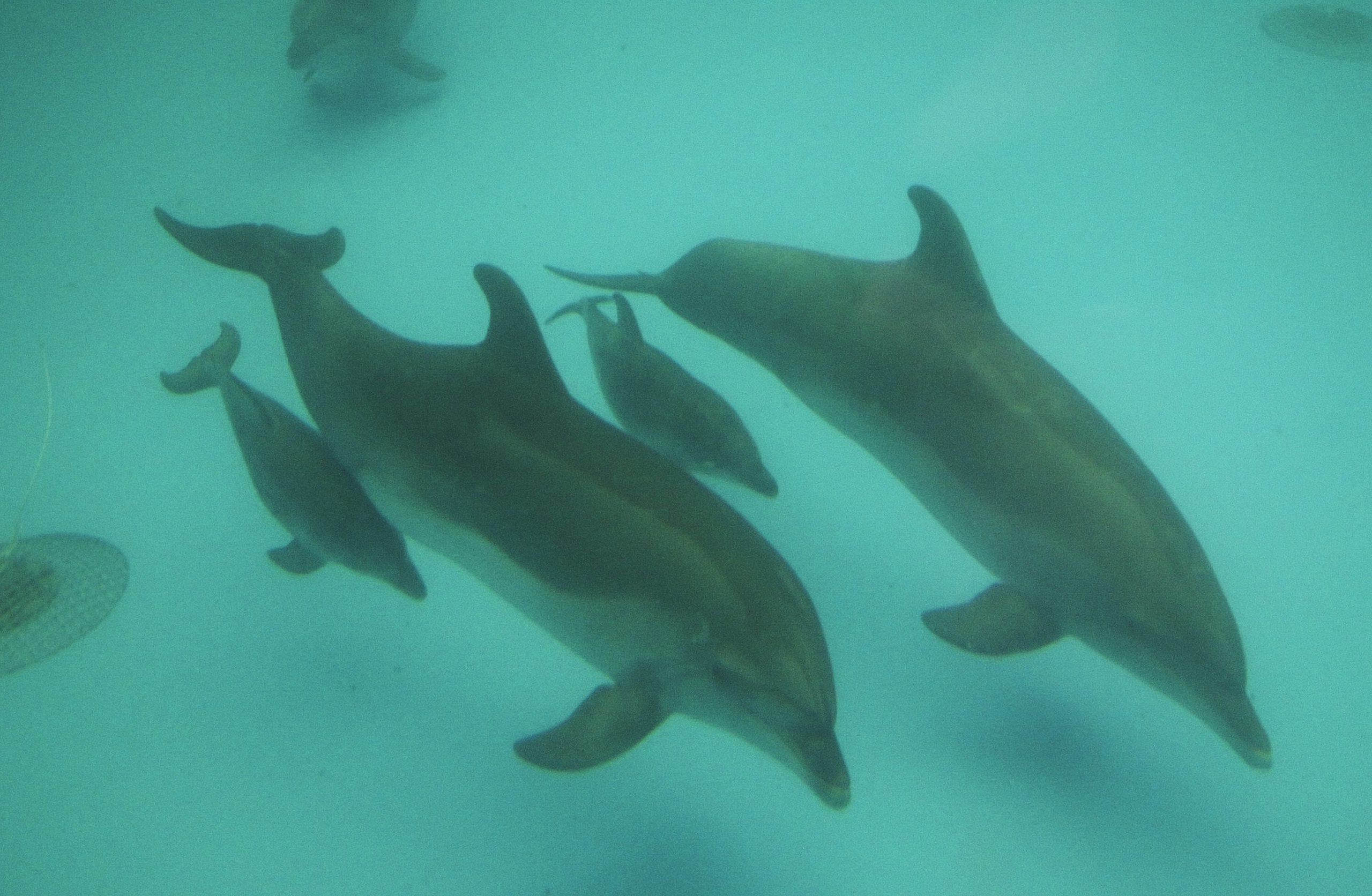
Banac: Dolphins in Serbia will suffer in captivity, just like other species
Jelena Banac from the Kreni-Promeni team for animal welfare tells Danas that their team opposes the construction of a dolphinarium, primarily because this government has so far shown no interest in better protecting the living world or respecting its own laws in the field of environmental protection.
“She has not shown any interest in having the necessary knowledge to protect the environment, because any expert who opposes any crazy multi-million project is declared an ignoramus and an obstacle to progress. In a country where poaching, illegal logging, where rivers are polluted with industrial waste without any consequences for the perpetrators, where the situation in shelters is catastrophic, because they are more like camps where animals are tortured and suffer, zoos are abandoned and wild animals are in them.” they only survive as exhibits, now they are planning to open a dolphinarium! We think that dolphins will be just another animal species that will suffer in captivity,” Banac points out.
Using the example of the Belgrade Hippodrome, she supports the suspicion that the situation will be different with the dolphinarium.
“What does the Belgrade Hippodrome look like and what do the stables next to it look like on land with unresolved legal-property relations, which does not prevent usurpers from abusing the situation,” Banac points out.
She reminds that Belgrade has neither the climate nor the climate for such a project, which again requires the destruction of part of the green belt.
“A felled tree is not just a felled tree, it is a habitat for some living creatures,” Banac points out and adds that the Kreni-Promeni team for animal protection is against, above all, the additional borrowing of the city, that is, citizens, in the name of megalomaniacal politicians’ fantasies.
“If such funds exist, we believe that it would be far more useful to arrange green areas, clean up garbage, solve the historical problem of wastewater treatment and the multi-decade problem of air pollution, which is getting worse from year to year. By introducing such solutions, Belgrade will become a better and healthier place, first of all for its residents, and then for all guests,” Banac believes.
In addition to all of the above, she reminds that the trend is the closing of dolphinariums and pools for animal animation, and the legal prohibition of commercial captivity and the display of animals for entertainment. To illustrate the trend, he cites the examples of Mexico, Canada, Bolivia, Costa Rica, Nicaragua, and closer to us, Cyprus, Switzerland, Croatia and Slovenia.
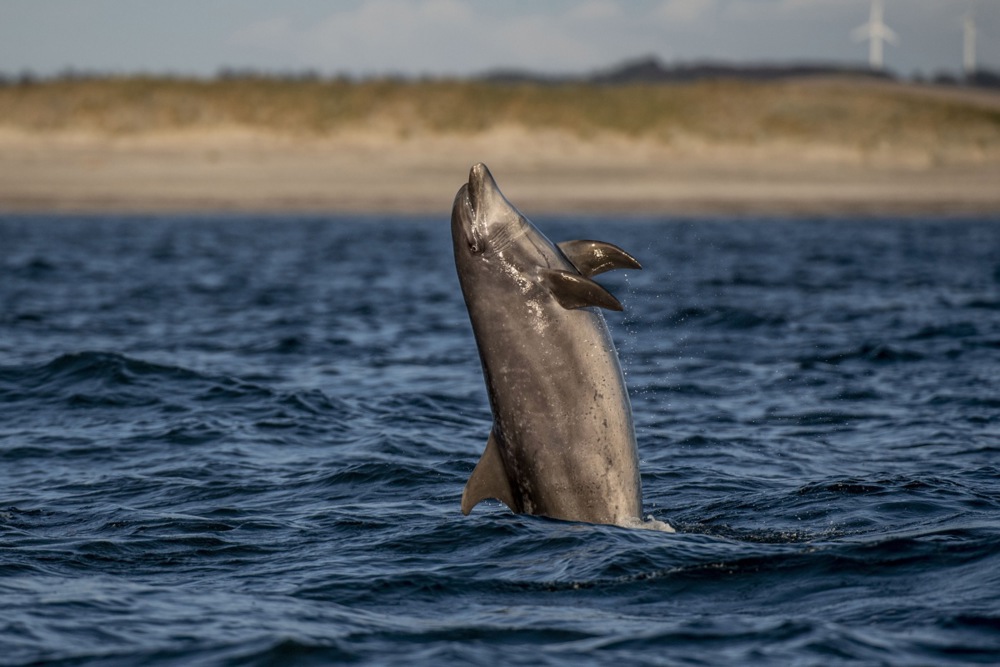
Gledić-Filipović: Detention is a crime against nature
The author of the Petition against the construction of an aquarium and dolphinarium in Belgrade from the Freedom for Animals Association , Ljiljana Gledić-Filipović, tells Danas that she could not believe it when she heard that the construction of an aquarium and dolphinarium was planned in Belgrade, because such facilities are closed and banned all over the world.
According to her, locking dolphins, other marine mammals, sharks, rays and fish in spaces that are like a matchbox in relation to their habitats is a crime against nature. It is a cruel act, she emphasizes, which only demonstrates the supremacy of man, and does not recognize the properties that nature itself has given to these beings.
“These beings have every right to live freely in their natural environment, in accordance with their species, and the denial of that right by man degrades man himself into a being that is the cause of torture and suffering of other beings on the planet,” Gledić-Filipović points out.
She reminds that the Animal Welfare Act of 2009 recognized and prohibited this.
“This ban is one of the basic and important achievements of civilization that we adopted as a country. It must not be called into question in any way. No other goal – a tourist attraction, the therapeutic role of dolphins, etc. – can be higher than that,” points out Gledić-Filipović.
She states that the latest scientific studies show that fish have a much more complex emotional and social life than previously thought, and that they can feel stress, fear and pain. Also, dolphins are one of the most intelligent species on the planet, beings that have self-awareness, emotions and show a high degree of empathy.
“Dolphins live in communities where each of them has their own name, have sophisticated social interactions and deep connection. In captivity, when they are deprived of freedom, space and contact with their group, severe stress, physical and psychological disorders, unnatural forms of behavior, drastically shortened life span and high mortality rate occur. Life in captivity is so unbearable for them that they most often end their lives by suicide – by hitting their heads against walls or even voluntarily stopping breathing. How can we expect that such can a sad and depressed animal have a positive therapeutic effect on children, with all the dangers that such contact realistically entails – from infections to physical injuries?” asks Gledić-Filipović.
Jevtović: Serbia is moving forward and not regressing in terms of animal welfare
Tamara Jevtović from the Vege community association believes that the construction of an aquarium and dolphinarium in Belgrade is absolutely unnecessary and unjustified.
“These buildings cannot meet animal welfare standards because fish, dolphins and other marine animals should remain free in their natural habitats. The alleged educational character of aquariums and dolphinariums mentioned could be achieved without the exploitation of animals, through various video content, including virtual reality,” explains Jevtović.
Namely, she points out, there are many other ways to ensure the education of the population and a better tourist offer of the capital, such as immersive exhibitions that are increasingly popular in the world.
“All over the world, facilities like this are being closed due to obvious flaws. We want Serbia to progress in terms of animal welfare, not regress,” says Jevtović on behalf of the Vega community and adds that large projects should take into account the environmental impact, as well as the impact on animals, and that the tourism offer of the capital can be enriched in much more ethical and modern ways.
“It is our responsibility to provide protection and undisturbed life for other species, and therefore we consider the confinement of such beautiful creatures in aquariums and dolphinariums to be absolutely inhumane,” points out Jevtović.
Petition against the dolphinarium
If you are also against the keeping of animals in captivity or for any other reason you do not want a dolphinarium to be built in Usce, you can sign the petition against the construction HERE .