Beyond the EXPO site
The project Belgrade EXPO 2027 is embedded in an organizational structure consisting of different terms and financial structures, obscuring transparency, while enabling financial bundling and building activities beyond the EXPO site. Despite several research efforts, until today it is unclear which construction activities are enabled and financed by the framing of the EXPO 2027.
- (IN)VISIBLE MECHANISMS OF (MIS)USE OF PUBLIC RESOURCES: THE EXPO BELGRADE 2027 PROJECT
- There is no going back, only forward – the only thing standing in the way is the public interest (EXPO 2027)
Researchers in (IN)VISIBLE MECHANISMS OF (MIS)USE OF PUBLIC RESOURCES: THE EXPO BELGRADE 2027 PROJECT point out that:
“The terminological confusion surrounding the Belgrade EXPO 2027 project is neither insignificant nor coincidental—it has directly affected the ability to understand the project’s scope, jurisdiction, and how it is planned and managed.”
- The project “Belgrade EXPO 2027”, defined by Serbia’s 2023 Special Procedures Law, allows the government to designate virtually any project nationwide as EXPO-related without prescribed criteria, granting it expedited procedures including reduced public consultation (15 vs. 45 days), vastly increased procurement thresholds (8-12x higher), and eliminated appeal mechanisms. This creates systemic discrimination in the construction industry and planning processes, with no defined limits on the law’s geographic scope or duration, as the number of project phases remains unspecified. (IN)VISIBLE MECHANISMS OF (MIS)USE OF PUBLIC RESOURCES: THE EXPO BELGRADE 2027 PROJECT
- The “Jump into the Future—Serbia EXPO 2027” investment plan obscures the specialized exhibition with an undefined €17.8 billion investment program covering infrastructure, industrialization, energy, ecology, agriculture, health, and tourism. The investment plan’s website links more than 100 projects to the investment plan, all over Serbia. The investment plan was announced by Serbia’s President in January 2024, but officially does not exist as a public document. When Transparency Serbia requested information about its creation, the government responded that it is not a policy document under the Planning System Law, no state administration participated in drafting it, and no employees or external collaborators were involved in its creation.
- Despite this, the program has become the basis for redesigning national fiscal strategies and budgets at all levels, with the government making numerous decisions to implement a program that cannot be read and whose formulation process remains unknown, while its name suggests it operates under the expedited EXPO 2027 legal framework. (IN)VISIBLE MECHANISMS OF (MIS)USE OF PUBLIC RESOURCES: THE EXPO BELGRADE 2027 PROJECT
- The National Stadium construction has been bundled with EXPO preparations under the same lex specialis and spatial plan in immediate proximity, sharing the problematic legal framework.
- BIE Secretary General Dimitri Kerkentzes publicly contradicted Finance Minister Siniša Mali’s claims by stating he cannot and will not defend linking 18 billion euros in other infrastructure investments to the Expo exhibition, insisting the exhibition should stand alone and cost only 1-1.3 billion euros. He emphasized that BIE investigates every corruption allegation and is not there to “whitewash the government’s image,” but rather to ensure technical safety standards are met.
Fiscal questions
The Fiscal Council has criticized this “planning in motion” approach, warning that the project diverts resources from essential areas like healthcare and the Belgrade metro while relying on unrealistic growth projections and excessive borrowing, with concerns about return on investment.
- Public investment at 7% of GDP is ‘exceptionally high’ and identified EXPO and National Stadium as the two largest drivers of the 2024 budget deficit increase (from 2.2% to 2.9% of GDP).
- Fiscal Council: Interest payments on government borrowing rose EUR 700m in two years (105bn to 185bn dinars, 2022-2024). The Council warned that ‘unfavourable terms currently associated with government borrowing amplify the risks’ of fiscal expansion.
- State repurchasing previously privatized land at up to 100x the original sale price – a textbook public-to-private extraction.
A total of nine cadastral parcels of agricultural land in Surčin were transferred from the former PKB Corporation (Serbia’s largest agricultural conglomerate) – the part remaining after privatization – to the state, free of charge, for the purpose of building the National Stadium. In addition, another 633 parcels worth 1.9 billion dinars were “extracted” from this company, which has been called the Agro-Industrial Corporation since April 2021. The data is available in the new report of the State Audit Institution.
Predicted costs
Fiscal strategy of the strategic projects accepted for 2026 has been recently changed. In the revised version, the costs have significantly increased. This includes EXPO costs.
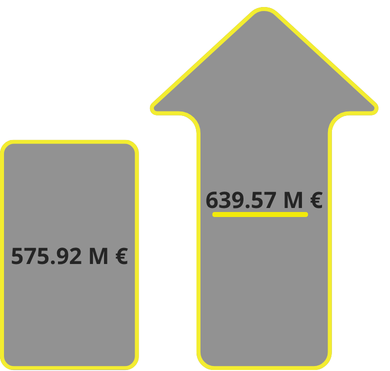
The estimated total value of the National Football Stadium construction project is now 639.57 million euros, and the estimate five months ago was 575.92 million euros, which is 63.65 million euros more!
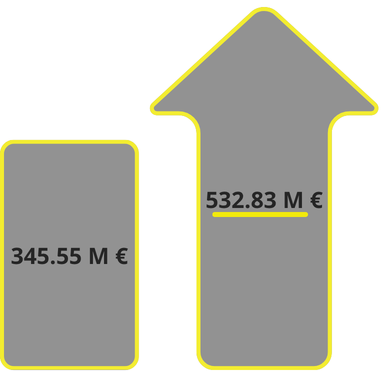
The line infrastructure and heat source project has also become more expensive – it is now 532.83 million euros, while it was estimated at 345.55 million euros. That is a difference of as much as 187.28 million euros more!