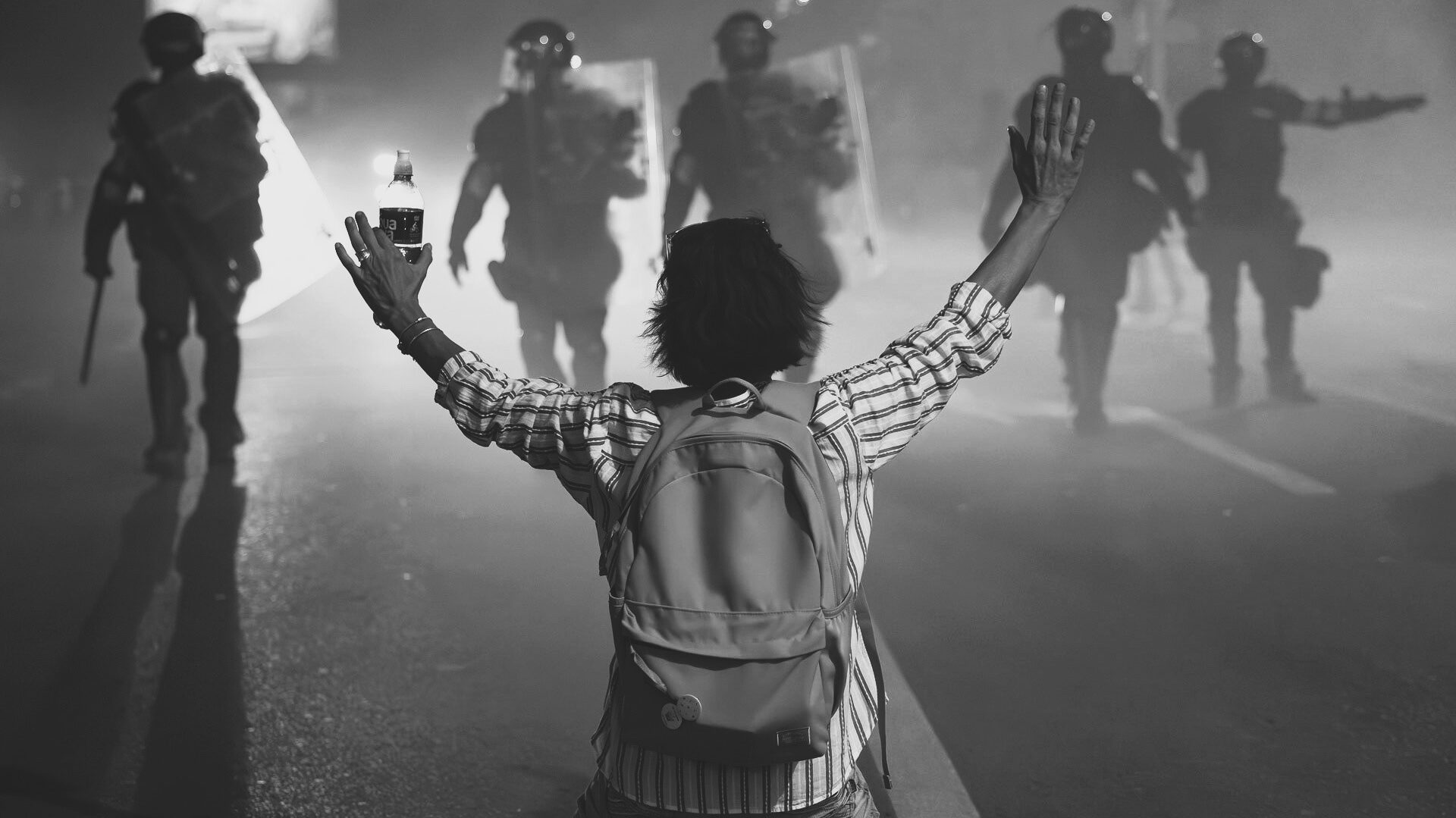
The preparations for the specialized exhibition Belgrade EXPO 2027 are unfolding within a political climate marked by a compromised reputation of the current Serbian regime.
Reports from relevant international bodies indicate a significant deficit in the rule of law and the weakening of democratic institutions, creating an environment of uncertainty for international partners and investors. The European Parliament, European Commission, and European Economic and Social Committee have all recognized serious issues related to the Specialized Expo project.
Local initiatives, NGOs, field experts, and academia have unanimously voiced concerns that the specialized exhibition project has grave legal and economic issues and that it does not benefit the local population.
European Institutions Recognise Systemic Corruption Issues
The European Parliament (EP) has expressed profound concern regarding pervasive corruption and the non-transparent expenditure of public funds in Serbia. Within the context of Belgrade EXPO 2027, particular emphasis has been placed on safety concerns and the absence of independent oversight for large-scale infrastructure projects, directly undermining the integrity of the upcoming Expo event. This resolution also points out that legislation is circumvented and that “legal redress and tender submission deadlines” are not compliant with EU standards.

The European Economic and Social Committee, together with civil society representatives of Serbia, has supported the demands of the local population while issuing a warning over the non-transparency of the Specialized Expo project.
The Government of Sweden has decided to review its support to Serbia in accordance with the principles of a merit-based enlargement of the EU. The decision means that parts of the support to government agencies in Serbia are withdrawn due to increasing corruption and the failure to uphold the rule of law.
The European Commission’s 2025 report states there is excessive use of force against protesters and no progress in developing fundamental rights and judiciary.
Finally, in its 2026 report, Freedom House warns that the ruling party “has steadily eroded political rights and civil liberties, putting legal and extralegal pressure on independent media, the political opposition, and civil society organisations.”
Local communities and civil society on the frontline against Specialised EXPO 2027
Discontent regarding safety and corruption in public projects culminated after the collapse of the canopy at the newly renovated Novi Sad Railway Station on 1 November 2024, sparking an unprecedented wave of protests in the country. This grave incident serves as a paradigmatic example of such risks in practice:
Safety and Accountability: Despite ongoing massive public protests and civil mobilization lasting over a year, there has been a notable lack of prosecution of the responsible individuals and companies, suggesting systemic protection of privileged actors.
- Canopy collapse in Novi Sad: Vesić and Momirović’s house arrest lifted
- The Higher Prosecutor’s Office in Novi Sad announced an appeal after the suspension of the proceedings against the defendants in the canopy collapse
- The office of the JTOK prosecutor leading the “Canopy” case burned down
- Canopy case: Three proceedings, half of one indictment confirmed
Lack of Transparency: Construction works are assigned to non-transparent consortia with documented political ties. The state has effectively bypassed standard regulatory oversight and independent scrutiny, sparking a unified demand from academic and professional communities for immediate declassification of all contractual and safety documentation. Project documentation remains classified and inaccessible to the public.
- Inquiry Commission into Canopy Collapse: Essential Documentation Missing, and the Published One Reveals Irregularity
- Transparency Serbia: Publication of documents on canopy collapse incomplete
- How the documents from the prosecution about the fall of the canopy ended up with Aleksandar Vučić
Organised and spontaneous actions across Serbia represent a bulk defiance against the exhibition. So far, civic actions have been actively organised to draw attention to the problems related to the Specialised EXPO Belgrade 2027 exhibition.
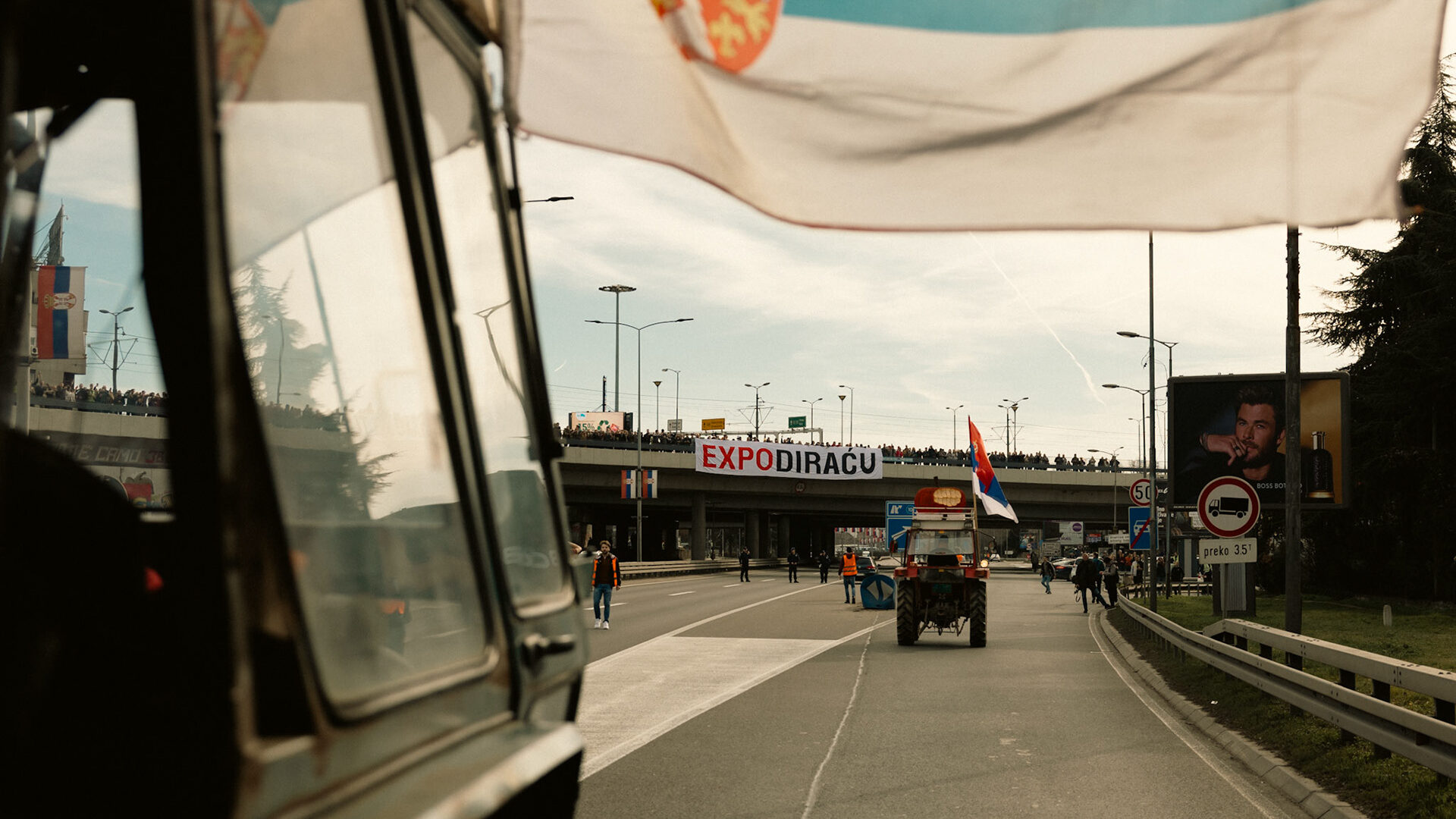
Some of them include:
- A public petition “STOP corruption, cancel the EXPO” was signed by 120,512 citizens and addressed to Bureau International des Expositions (BIE)
- Civil society, experts and NGOs have unanimously raised concerns over this project.
- NGO warns government breaking law for EXPO 2027
- Experts call government to revoke draft law on EXPO 2027
- No public procurement for EXPO 2027 project
- A group of experts have composed a ”Formal Notice Concerning Systemic Legal Violations, Corruption, and Safety Risks Related to EXPO 2027 Belgrade, Serbia”, addressed to Mr Dimitri S. Kerkentzes, Secretary General of the Bureau International des Expositions (BIE). That letter of notice has been signed by 6,411 people and sent to the BIE. Yet, this formal notice that was delivered to the BIE Headquarters in Paris on 28 August 2025 has not been acknowledged by the BIE to this day. Meanwhile, in an interview given to Forbes in February 2026, the Secretary General of the BIE, Dimitri Kerkentzes, stated that he is open to dialogue and willing to engage in discussions with citizens of Serbia who are wary of important aspects of the EXPO 2027 preparations.
- Ongoing massive protests by students and citizens contesting and organising resistance against the project. A group of students and professors from the Architectural Faculty of the University of Belgrade have formed the group “EXPOdiraću” dedicated to unmasking the structural issues of the project.
- Group Paris 11.52 asks the International Bureau of Exhibitions to cancel Expo 2027
- EXPOding protest in Belgrade
- Students protest during EXPO Planning Meeting in Belgrade
- Parliamentary opposition parties sent an official letter to BIE representatives asking for a cancellation of the project, “considering the collapse of the canopy in Novi Sad and the way projects are executed in Serbia”.
Unfortunately, the railway station canopy collapse in Novi Sad (2024) is not a lonely example. The current Serbian administration has more to offer: Central Railway Station “Prokop” in Belgrade, the host city of EXPO 2027, is another one. The station was in use even prior to its official opening in October 2023. To this day, “Prokop” has not obtained an occupancy permit, despite thousands of passengers using the facility daily. There are two primary reasons for this: first, the construction work was not executed in line with the issued building permit; and second, there is no documented evidence that the building has passed a technical inspection. The load-bearing columns are cracked.
- Station Prokop without a use permit and technical documentation for fire protection
- A new case of Prokop? The works at the Novi Beograd station are being carried out due to problems with the bearing capacity of the structure and without a permit
April 7th, a crane collapsed at the construction site of the new bridge over the Sava River in Belgrade. In the accident, a worker, a foreign citizen, died. The contractor for this project is PowerChina, the same one that employs workers without work permits on the Expo project. As a result, the civic inspector ordered the site closure, and the public prosecution is conducting an ongoing investigation.
With Belgrade set to host millions of international guests and staff for EXPO 2027, these structural red flags should not be ignored. The reliance on facilities that bypass standard safety protocols creates a high-stakes environment where “business as usual” could lead to another disaster.
International art community invited to boycott EXPO 2027 by Serbian peers
An open letter from Serbian artists and scholars is urging the international art community to boycott BelgradeExpo 2027 because the government is using the artistic aspect of the event to whitewash severe cultural repression and systemic corruption.
The Movement Community of Arts and Culture (Zajednica umetnosti i kulture) grew out of solidarity with student protests that erupted in late 2024. In response, the government is heavily targeting cultural workers through severe budget cuts, censorship, professional retaliation, and political appointments.
Art and Culture Community points out that Serbia’s culture budget has plummeted to just 0.67% of government spending – the lowest in Europe – leaving local artists in extreme financial insecurity while massive public funds are diverted to the tenders for projects exclusively related to EXPO. While regular tenders had lower rewards in 2026 than in previous years, with unclear terms and unknown members of the committee deciding who wins the tender, EXPO tenders had higher rewards and sent out a polite invitation to the entire cultural scene; however, there was little response.
- Expo tender for culture and arts
- Financing forwarded from Culture to EXPO, Danas, May 2026
Ultimately, the collective is asking global peers to reject official collaboration with the event and instead offer direct, active support to the independent creative community inside Serbia.
A Systemic Collapse
These infrastructure failures do not happen in a vacuum; they are a direct result of a crumbling oversight system. Recent events underscore a broader crisis of institutional independence in Serbia:
- The March 31, 2026 Police Raid: The unprecedented raid on the University of Belgrade signaled a sharp turn away from academic and institutional autonomy.
- The “Mrdic Laws” Controversy: Currently under the microscope of the Venice Commission, these legislative shifts threaten to dismantle the very checks and balances required for transparent state governance.
When the police can enter a university with impunity and laws are rewritten to bypass scrutiny, the capacity for independent oversight of massive projects like EXPO 2027 effectively vanishes.
The Bottom Line
Infrastructure is only as strong as the institutions that oversee it. Until Serbia restores independent accountability and ensures its “prestige” projects meet basic legal and technical safety standards, the road to EXPO 2027 remains a dangerous one.